
Acronis Disk Director for Windows is a professional disk management and partitioning solution that helps users create, resize, merge, split, move, copy, clone, and recover disk partitions without unnecessary complexity. It supports MBR and GPT disks, volume recovery, disk cloning, and file system management, making it useful for home users, IT professionals, and businesses. Whether you’re upgrading storage, organizing partitions, or recovering lost volumes, Acronis Disk Director provides reliable tools for efficient disk management.

Acronis Disk Director Overview
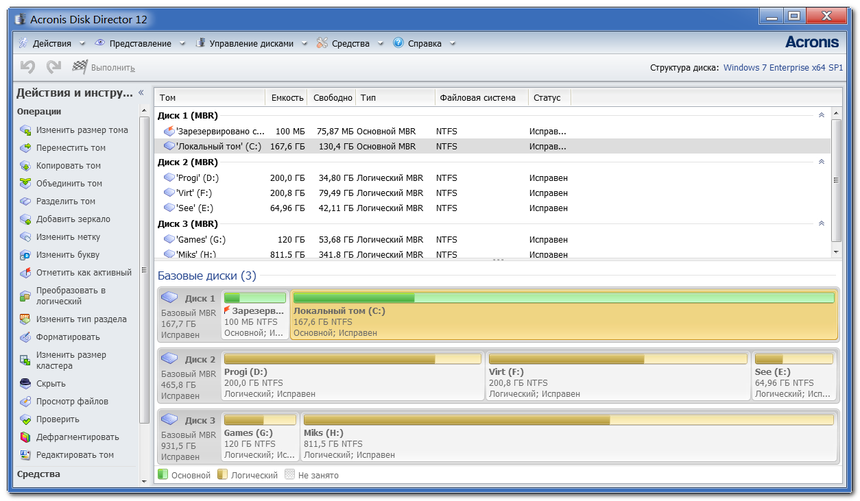
Managing storage devices efficiently is essential for maintaining an organized and reliable Windows system. Acronis Disk Director for Windows provides a complete set of disk management tools that simplify partitioning, cloning, and volume recovery for both personal and professional use.
The software allows users to create new partitions, resize existing ones, merge or split volumes, copy partitions, and clone entire disks with minimal effort. It supports both MBR (Master Boot Record) and GPT (GUID Partition Table) disk formats, making it compatible with modern storage devices and Windows systems.
Acronis Disk Director also includes volume recovery capabilities that help restore accidentally deleted or damaged partitions. Combined with flexible disk management features, it enables users to reorganize storage without reinstalling Windows or losing important data.
With its intuitive interface and powerful management tools, Acronis Disk Director is well suited for upgrading hard drives, migrating data to SSDs, managing multiple operating systems, and optimizing storage layouts. It offers a practical solution for users who need dependable partition and disk management on Windows.
Key Features:
- Advanced Partition Management
Create, resize, move, split, merge, and delete partitions without reinstalling Windows. - Disk Cloning
Clone an entire hard drive or SSD for easy system migration or hardware upgrades. - Volume Recovery
Recover accidentally deleted or lost partitions to restore access to important data. - MBR & GPT Support
Fully supports both MBR and GPT partition styles for modern and legacy systems. - Disk Conversion Tools
Convert disks between different partition styles while maintaining compatibility where supported. - Flexible Volume Operations
Copy, rename, format, and modify partitions to better organize storage space. - Bootable Recovery Media
Create bootable media to manage disks and recover partitions outside Windows. - Multi-Disk Management
Manage internal drives, external storage devices, and multiple hard disks from one interface. - File System Compatibility
Supports common Windows file systems, including NTFS, FAT32, FAT16, and exFAT. - Easy-to-Use Interface
Clean management console simplifies complex disk operations for both beginners and professionals. - Safe Storage Management
Performs partition operations while minimizing the risk of unnecessary data loss. - Professional Storage Tools
Suitable for home users, IT administrators, and businesses managing multiple storage devices.
What’s New?
- Improved Windows 11 compatibility.
- Enhanced disk cloning performance.
- Better GPT disk support.
- Faster partition management.
- Improved recovery reliability.
- Updated storage device compatibility.
- Enhanced user interface.
- Fixed reported issues.
- Improved application stability.
- General performance improvements.
Pros & Cons:
Pros
- Powerful partition management tools.
- Reliable disk cloning feature.
- Supports MBR and GPT disks.
- Easy-to-use interface.
- Includes partition recovery.
- Suitable for personal and business use.
Cons
- Premium software with a paid license.
- Some advanced operations require careful planning.
- Certain features may require a system restart.
System Requirements:
Minimum Requirements
- Operating System: Windows 11, 10, 8.1, 8, or 7
- Processor: Intel or AMD 1 GHz or faster
- Memory: 2 GB RAM
- Storage: 500 MB available space
- Display: 1024 × 768 resolution
Recommended Requirements
- Windows 11 (64-bit)
- Intel Core i5 or higher
- 4 GB RAM or more
- SSD storage
- Internet connection for updates
How to Install Acronis Disk Director on Windows?
Getting started is straightforward.
- Download the latest version of Acronis Disk Director for Windows.
- Run the downloaded installer.
- Follow the installation wizard.
- Accept the license agreement.
- Select the installation location.
- Complete the installation.
- Restart your computer if prompted.
After installation, launch the software, detect your storage devices, and review the current partition layout before making any changes. Creating a backup beforehand is recommended for important data.
Frequently Asked Questions
1. Is Acronis Disk Director free?
A free trial may be available, while the full version requires a commercial license.
2. What is Acronis Disk Director used for?
It is used for partition management, disk cloning, volume recovery, and storage optimization on Windows.
3. Can I clone my hard drive to an SSD?
Yes. The software includes disk cloning tools that help migrate data from an HDD to an SSD.
4. Does it support GPT disks?
Yes. It supports both GPT and MBR partition styles.
5. Can I recover deleted partitions?
Yes. The built-in recovery feature can restore certain lost or deleted partitions, depending on the condition of the drive.
6. Does it work with external drives?
Yes. It supports many internal and external storage devices recognized by Windows.
7. Is Acronis Disk Director compatible with Windows 11?
Yes. It supports Windows 11 as well as Windows 10, Windows 8.1, Windows 8, and Windows 7.
8. Should I back up my data before partitioning?
Yes. Creating a backup before making major disk or partition changes is always recommended.
Download Link is Given Below…